AgroSensor
Field-node firmware for precision agriculture. An ESP8266 samples a soil probe and a water board, applies calibration and temperature compensation, and publishes readings as versioned JSON.
- C++
- PlatformIO
- ESP8266
- IoT

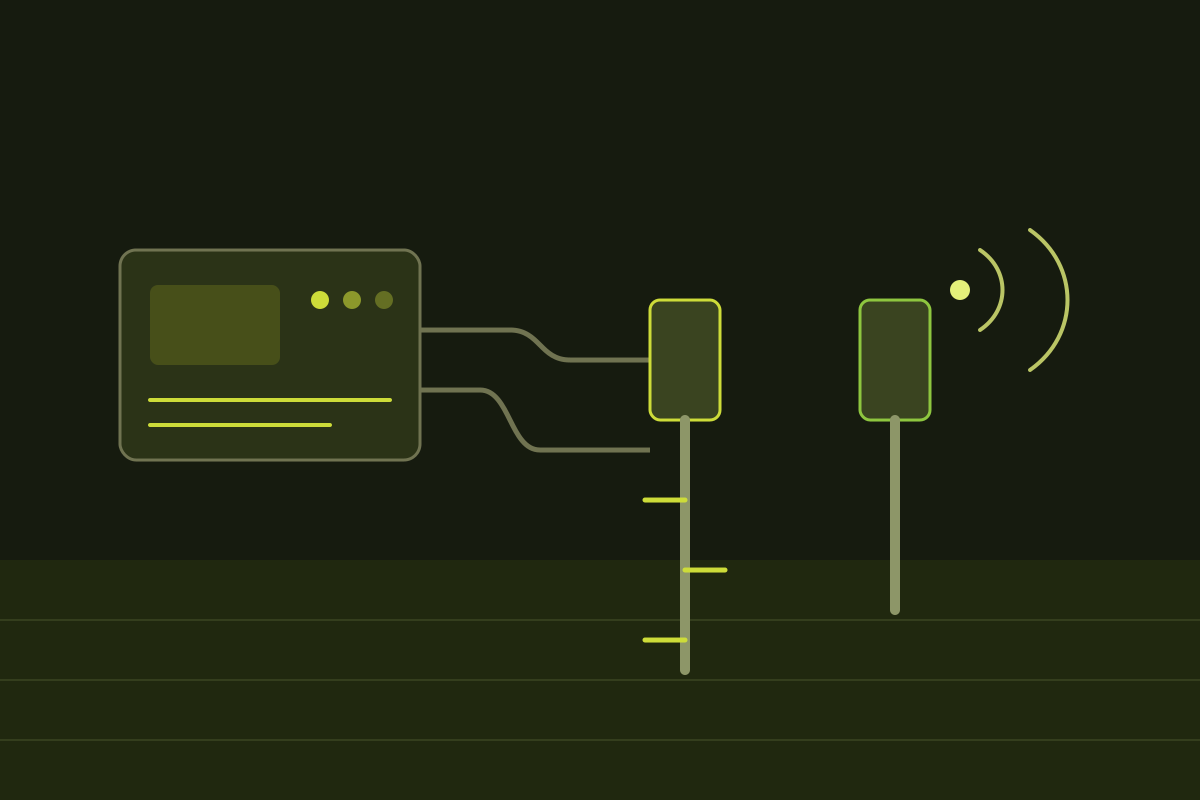
AgroSensor is the field node of the AgroSmart system. A NodeMCU ESP-12E samples two very different sensor boards — a 4-in-1 water board over TTL UART and a 7-in-1 soil probe over RS485 Modbus RTU — and turns their readings into versioned JSON that a backend can trust.
Most of the engineering is in not lying about what the hardware actually measured.
The soil probe does not measure nitrogen, phosphorus or potassium: it measures bulk
electrical conductivity and back-calculates all three from a linear fit, so every
reading carries an npkEstimated flag that stays true until per-soil coefficients
are written to the device. Dry soil legitimately reports zero nitrogen, and there
is a test asserting that such a frame decodes as valid rather than as a fault.
Architecture
| Name | Description | Version |
|---|---|---|
| C++ / Arduino | Firmware for the NodeMCU ESP-12E. Both sensors run on SoftwareSerial, which leaves UART0 free on USB for logging throughout. | C++11 |
| PlatformIO | Build, flash and test runner. A native environment runs the host-side unit tests with no board attached. | 6.x |
| NodeMCU ESP-12E | ESP8266 module doing the sampling and publishing. Not 5V tolerant, so every sensor line goes through a divider. | ESP8266 |
| Modbus RTU over RS485 | Transport for the 7-in-1 soil probe at 4800 8N1, through an auto-flow-control converter with no DE/RE pin. | RTU |
| TTL UART | Transport for the 4-in-1 water board at 9600 8N1. The two boards run at different baud rates, which is the most common cause of an apparently dead sensor. | 8N1 |
| Unity test framework | 194 passing host-side tests, including the case where dry soil legitimately reports zero nitrogen. | 2.5 |
C++ / Arduino
C++11Firmware for the NodeMCU ESP-12E. Both sensors run on SoftwareSerial, which leaves UART0 free on USB for logging throughout.
PlatformIO
6.xBuild, flash and test runner. A native environment runs the host-side unit tests with no board attached.
NodeMCU ESP-12E
ESP8266ESP8266 module doing the sampling and publishing. Not 5V tolerant, so every sensor line goes through a divider.
Modbus RTU over RS485
RTUTransport for the 7-in-1 soil probe at 4800 8N1, through an auto-flow-control converter with no DE/RE pin.
TTL UART
8N1Transport for the 4-in-1 water board at 9600 8N1. The two boards run at different baud rates, which is the most common cause of an apparently dead sensor.
Unity test framework
2.5194 passing host-side tests, including the case where dry soil legitimately reports zero nitrogen.
Applications
- Measuring soil moisture, temperature, conductivity, pH and NPK on smallholder plots.
- Reading water pH, sunlight, temperature and water level from the companion 4-in-1 board.
- Publishing versioned JSON telemetry to the AgroSmart ingest API over HTTP.
- Spooling readings through a network outage and replaying them once the uplink returns.
- Provisioning over a captive portal, so a node reaches the field without credentials compiled in.
Access the project
The host-side test suite runs with no hardware at all — one PlatformIO command against the native environment. To go further, flash a NodeMCU and develop the uplink against the bundled mock ingest server, which can simulate an outage or a given failure rate. Read the wiring notes before applying power: the ESP8266 is not 5V tolerant.
